
The Cycle of Change
We all go through changes during our lives. Some changes happen naturally and effortlessly. Other changes can cost you time, investment, money, and a lot of frustration. Sometimes, even when you have decided that from now on you are dieting, quitting smoking, or exercising regularly, you find yourself returning to old patterns.
According to the book 'Changing for Good' by psychologists Prochaska and DiClemente, change is a circular process, with ups and downs, containing setbacks and relapses. The process of change is divided into stages, and different tools are suited to each stage. For example, giving diet menus and sending YouTube exercise videos would be pointless for someone who has not yet decided they want to adopt a healthy lifestyle.
The Six Stages in the Cycle of Change According to Prochaska and DiClemente
The First Stage: Pre-Contemplation
You are not thinking about change and have no desire to hear about it. As far as you're concerned, you are doing just fine.
How do we move forward from here? At this stage, it is worth trying to think about the negative aspects of the current situation and what could improve if we made a change, both for ourselves and for those around us.
The Second Stage: Contemplation
The ambivalent stage. You already know you want a change, but are not completely able to make it happen. This is a stage of reasons and excuses as to why it is not the right time to make a change.
How do we move forward from here? When we contemplate, we weigh pros against cons, though not always consciously. In this case, it is helpful to try and minimize the weight of the cons as much as possible compared to the pros, tilting the scale in favor of starting the process.
The Third Stage: Preparation / Decision
You have reached the decision that you are starting the process and begin to prepare for it, whether by buying athletic shoes, signing up for a gym, or scheduling an appointment with a dietitian. Yet, from time to time, the voice that dampens motivation and raises doubts still nags at you.
How do we move forward from here? Ask yourself: Do you believe you are capable of succeeding? How important is it to you? What will it achieve for you and for those around you? What are you afraid of? Do you have any secondary gain from the current situation that might pose a difficulty further down the road?
This is the time to plan a course of action, examine secondary gains from the current situation, and allow space for occasional slip-ups so as not to break down. Treat the steps you are taking now as a learning process. Note insights in a journal along the way to help you learn from slip-ups and challenges, reinforcing behaviors that promote change.
The Fourth Stage: Action
You know there is a problem, you have decided on your desire to change, you have already weighed the pros and cons, you have begun preparations for the change, and now it is time to roll up your sleeves and act. Despite your decision, you encounter obstacles along the way and slip up.
How do we manage to persist? Now that you have started the big change, you need to see how to make it an organic part of your life. Dealing with slip-ups, which are bound to happen, is part of the process. Learning from slip-ups without dropping out of the process is a guarantee for success.
The Fifth Stage: Maintenance
The maintenance stage is complex. You have already changed your behavior, but occasionally, when you are tired, hungry, or stressed, the old voice arises, calling you to return to old habits.
What do you do? Re-examine your secondary gains from the old habit and try to find a solution that works for you. Share your experiences with those close to you and seek professional help. The key is not to give up.
If you do not give up, you will exit the cycle into the desired permanent change. In permanent change, you are deep into the new habits.
The Sixth Stage: Relapse / Slip-up
Remind yourself that slip-ups are part of any learning process, but they absolutely do not mean you should give up. Understanding that it is okay to fall will allow you to make mistakes without losing your peace of mind and abandoning the process. Prepare in advance for slip-up situations, draw lessons, and prepare 'contingency plans' for times when motivation is low.
Do not criticize, judge, or beat yourself up; it won't help you cope and learn from mistakes. It is important to develop tools for self-compassion. This will help you navigate crises and learn from them rather than giving up.
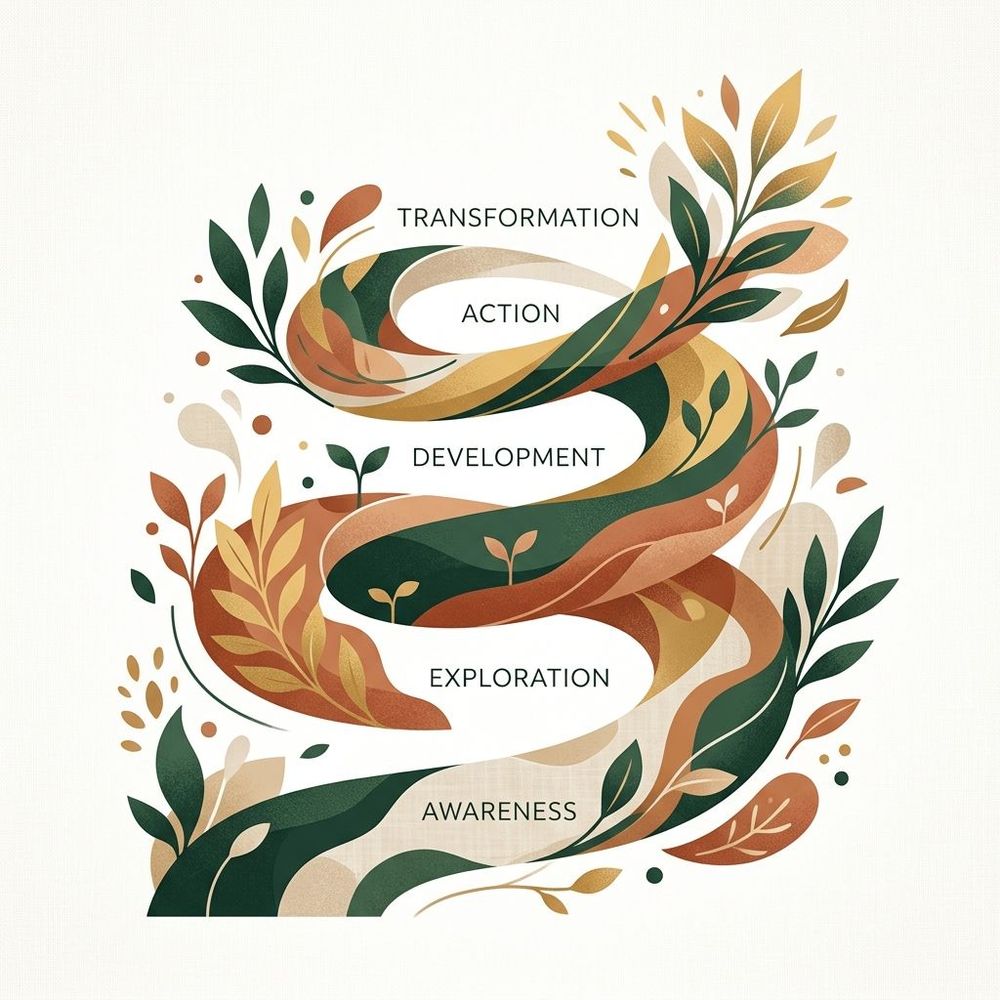
The process of change reminds me of an upward spiral. Every time we exit the cycle of change due to a slip-up and try to return, we do not start at the same point, but from a higher place that reflects the learning curve we achieved in previous stages.